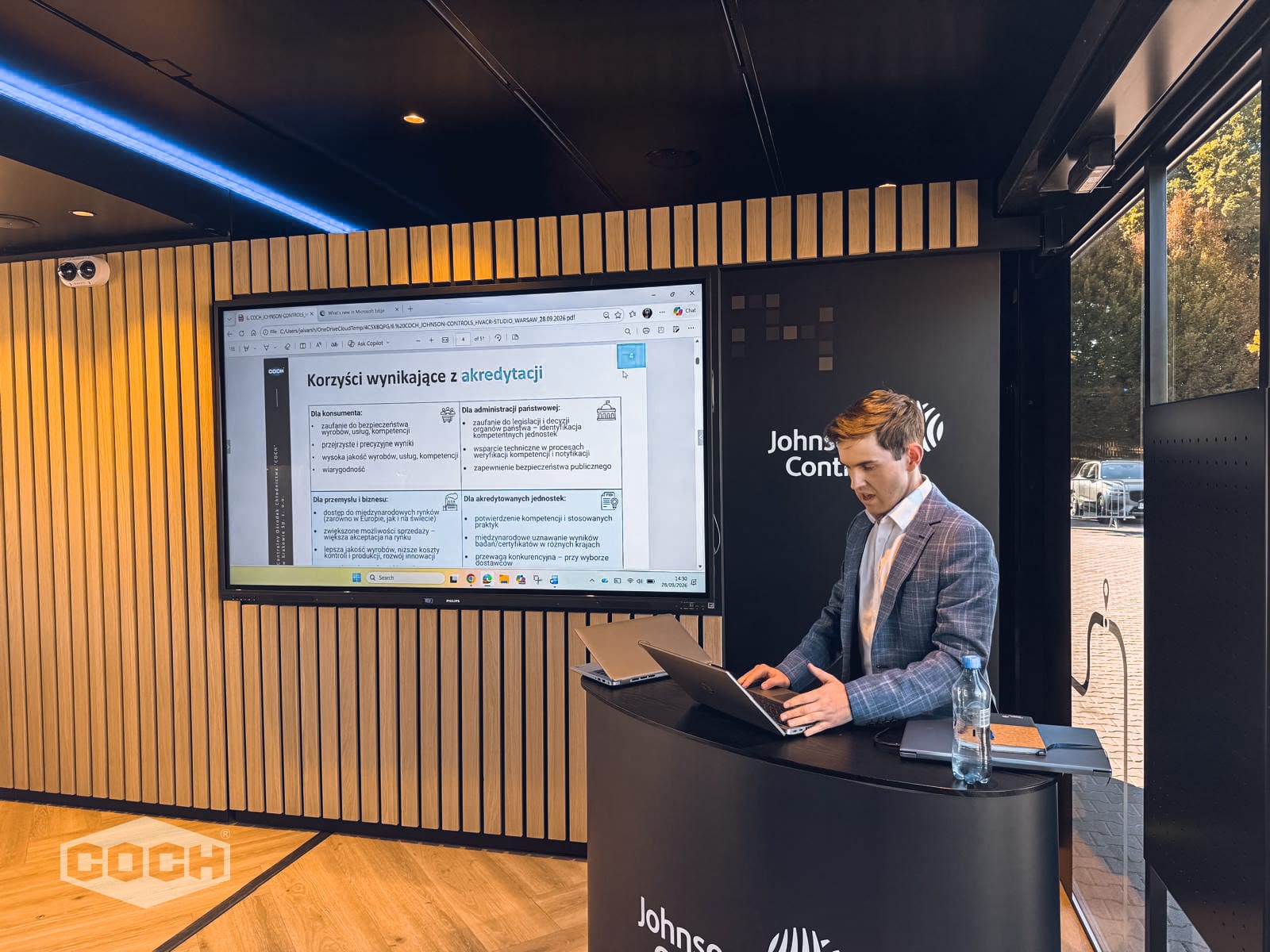
On 28 September 2026 at the National Stadium in Warsaw we gave a talk on testing, certification and performance assessment of HVAC systems at Innovation Studio Poland, organised by Johnson Controls Europe.
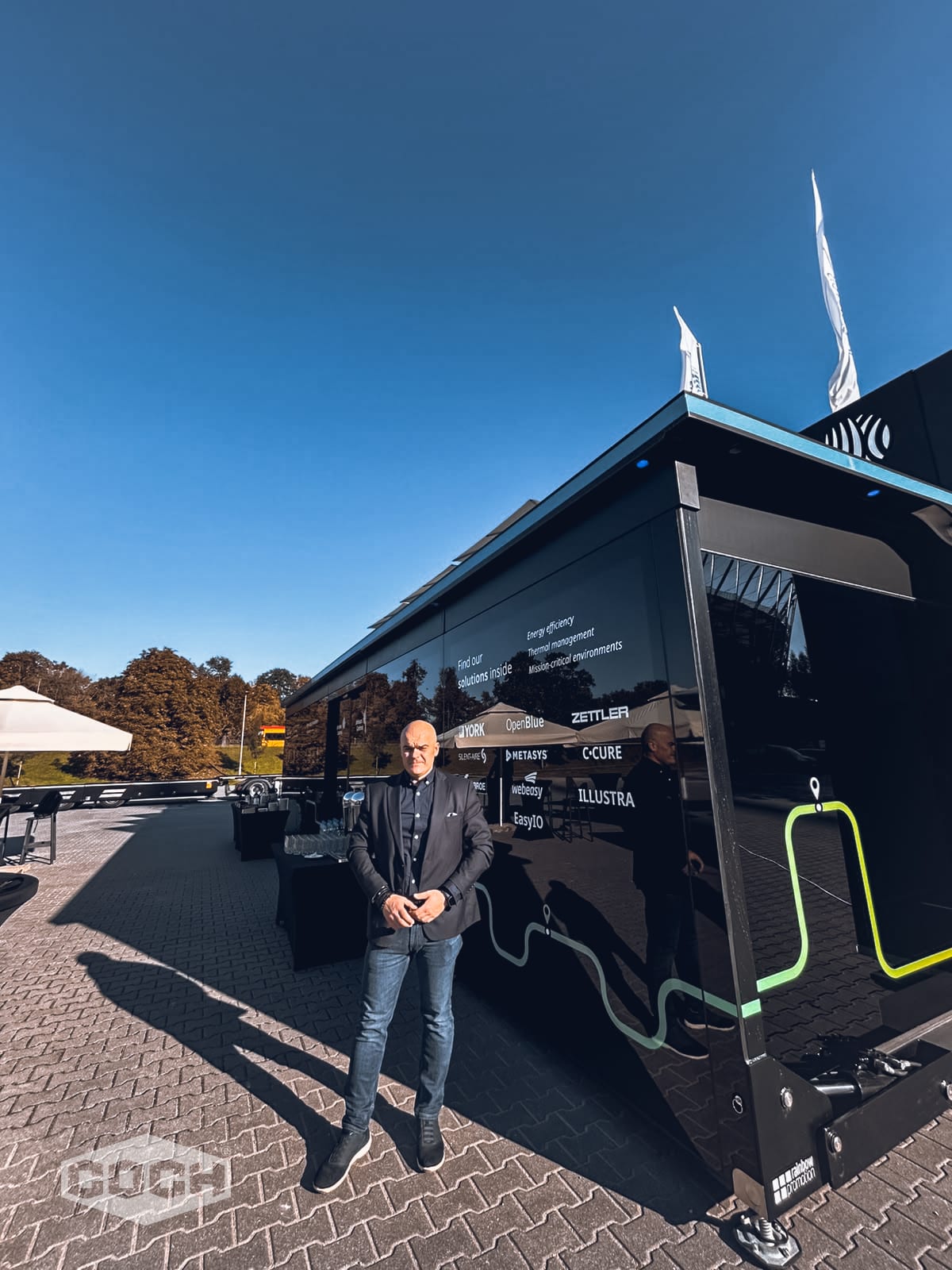
On 28 September 2026 we took part in “Innovation Studio Poland: Thermal Energy, Energy Efficiency and Decarbonisation in Modern Buildings”, held at the PGE Narodowy National Stadium in Warsaw.
The event was organised by Johnson Controls Europe and brought together representatives of the HVACR, energy, industrial and building sectors. It was an opportunity to discuss new technologies, energy efficiency, decarbonisation and solutions that are increasingly used in buildings and industry.
COCH was represented by Bogdan Szczepański and Miłosz Gratkowski.

At a glance
- Where and when: National Stadium, Warsaw, 28 September 2026; Johnson Controls mobile Innovation Studio.
- Our contribution: the talk “Certification, Testing & HVAC System Performance: Ensuring Buildings Deliver as Designed”.
- Topics: HVAC testing and certification, accreditation, natural and HFO refrigerants, heat pumps for industry and district heating, decarbonisation.
Our presentation on HVAC testing and certification
One of the items on the agenda was our presentation:
“Certification, Testing & HVAC System Performance: Ensuring Buildings Deliver as Designed”.
We focused on the importance of testing, certification and performance assessment of modern HVAC systems, and on how confirming the actual properties of equipment and systems fits into the process of placing them on the market.
Developing HVAC technology today is not only about looking for ever more efficient solutions. Safety, regulatory compliance, conformity assessment and verification of the performance declared by manufacturers matter just as much.
From our perspective, testing and certification are an essential part of this process – they make it possible to verify the properties of equipment and solutions and provide the information that both manufacturers and users need.
Why accreditation matters
Part of the talk looked at what accreditation gives each market participant:
- Consumers – confidence in the safety of products, services and competence, and transparent, precise and credible results.
- Public authorities – identification of competent bodies, technical support in competence verification and notification, and public safety.
- Industry and business – access to international markets (in Europe and worldwide), wider market acceptance, better quality and lower inspection and production costs.
- Accredited bodies – confirmation of competence and practices, international recognition of test results and certificates, and a competitive edge when customers choose suppliers.
Test reports from accredited laboratories – such as our AB 308 laboratory – are recognised under the ILAC MRA, so a manufacturer can use a single test result in many markets.
See also: product certification · AB 308 laboratory accreditation scope
Modern refrigerants – new technologies and requirements
In our presentation we also addressed the changes taking place in the refrigerants being used.
Solutions based on hydrocarbons, carbon dioxide (CO₂), ammonia and HFO refrigerants are becoming increasingly important. The trend is reinforced by the F-gas Regulation (EU) 2024/573, which phases HFCs out of the EU market.
Their use comes with specific technical and organisational requirements, covering safety, equipment design and operation, conformity assessment and appropriate training of personnel.
What to watch for with each refrigerant
- Hydrocarbons (e.g. R290 propane, R600a isobutane) – safety class A3 (highly flammable): charge limits, explosion hazard zones, component selection.
- CO₂ (R744) – class A1, but very high operating pressures, especially in transcritical cycles; strength and tightness testing is critical.
- Ammonia (R717) – class B2L (toxic, lower flammability): requirements for machinery rooms, detection and ventilation.
- HFOs (e.g. R1234yf, R1234ze) – class A2L (lower flammability): design and installation rules under EN 378 and ISO 5149.
That is why, when designing and deploying new HVACR systems, it is important to look at the solution as a whole – not only at the refrigerant or the unit itself, but also at its performance, safety, formal requirements and the competence of the people who operate it.
See also: personnel certification
Heat pumps for industry and district heating
Another key topic of the event was heat pumps and their use beyond conventional building installations.
We discussed the potential of heat pumps in district heating and industry, where requirements for operating conditions and efficiency can differ significantly from typical applications – for example higher supply temperatures, waste-heat recovery and operation across a wide load range.
Cogeneration solutions and technologies that improve energy use efficiency were also discussed.
As these solutions develop, testing that reliably determines their performance and suitability for specific conditions becomes ever more important. Our laboratory tests heat pumps to EN 14511 (COP/EER), EN 16147 (domestic hot water) and EN 14825 (SCOP, part-load operation) – including the compensation method.
See also: heat pump testing to EN 14511, EN 16147 and EN 14825
Conversations, exchange of experience and new solutions
Innovation Studio Poland was not only a chance for us to share our own experience. Conversations with industry representatives and the exchange of experience were an equally important part of the event.
We talked about the current challenges facing manufacturers and users of HVACR systems and learned about new technological solutions.
What was on show in the Innovation Studio
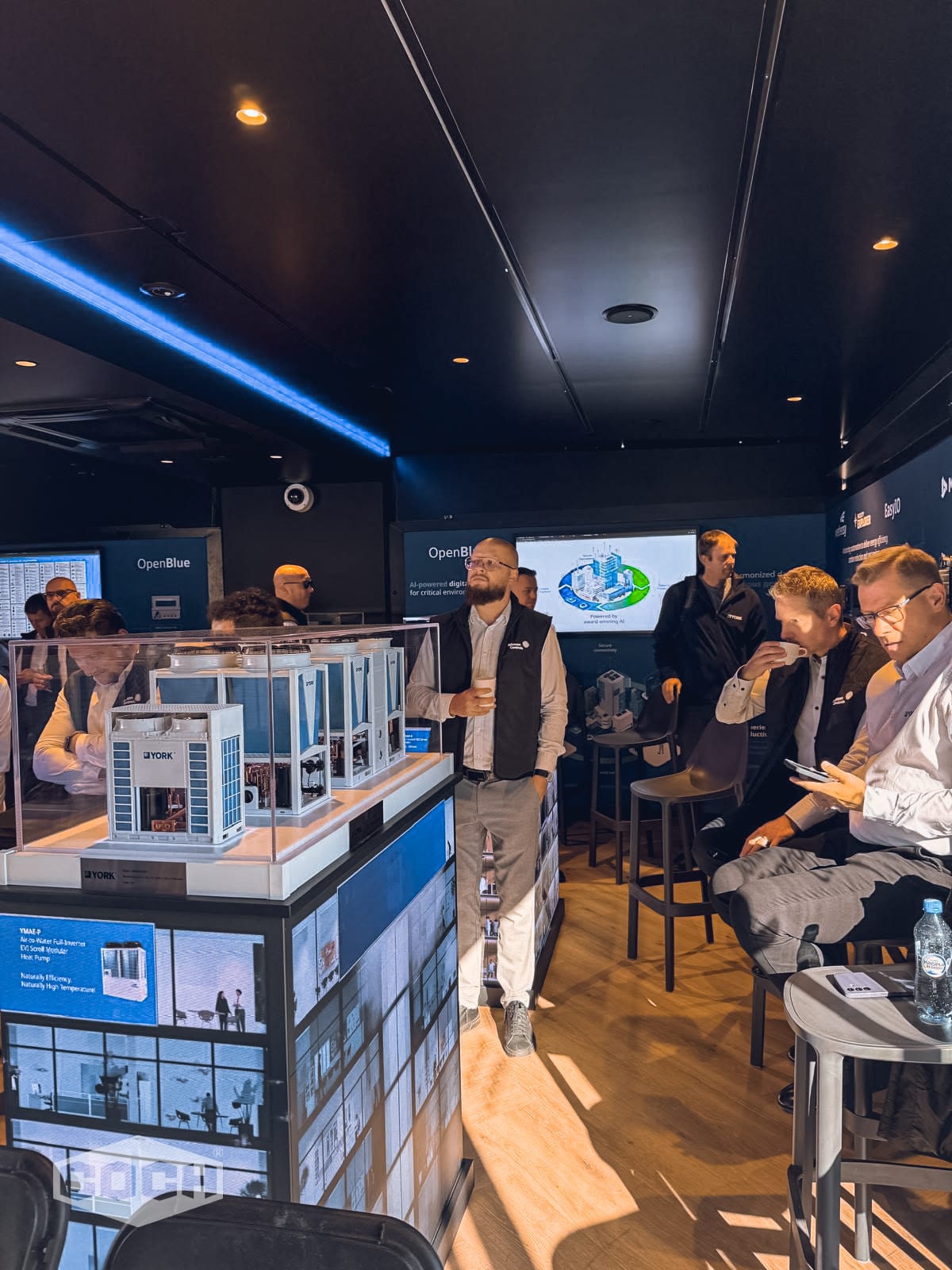
The Johnson Controls mobile studio showcased solutions for energy efficiency, thermal management and mission-critical environments – including YORK equipment (among them the YMAE-P modular air-to-water heat pump with EVI scroll compressors), the OpenBlue platform, the Metasys building management system, and solutions from Sabroe, Silent-Aire, ZETTLER, C•CURE, Illustra, webeasy and EasyIO.
Meetings like this are particularly valuable at a time when the industry is changing fast – in terms of technology as well as requirements for energy efficiency, safety and the refrigerants used.
How we can help HVACR manufacturers and users
Many of the topics discussed at Innovation Studio are our teams' day-to-day work. Choose the area you are interested in:
Thank you for the invitation
We are glad to have been part of Innovation Studio Poland and to have shared our experience in testing, certification and performance assessment of HVAC systems.
We thank Johnson Controls Europe for the invitation and for the opportunity to take part in the event and in discussions on the future of HVACR technology, energy efficiency and decarbonisation.
More about the event:
Innovation Studio Poland – Johnson Controls
Rate this article
Be the first to rate this article!