Holding a competence certificate is becoming a standard not only among technical staff. The issue of an appropriate competence level gains extra importance where activities involve risks to life, health or the natural environment – as may be the case in refrigeration, air conditioning and heat pumps.
F-gases, natural refrigerants, flammable refrigerants, ammonia
Holding a competence certificate is becoming a standard not only among technical staff. The issue of an appropriate competence level gains extra importance where activities involve risks to life, health or the natural environment – as may be the case in refrigeration, air conditioning and heat pumps.
The increasingly widespread use of refrigeration and air-conditioning equipment in many areas of life – from industry, through trade and services, to households – is inevitably accompanied by a growing risk to people, property and the natural environment. These risks are mainly linked to the physical and chemical properties of refrigerants and to the pressures and temperatures present in equipment and installations.
To learn about our training and competence certification offer under PN-EN 13313:2011, click the panels below:
Accredited refrigeration competences (PN-EN 13313) – preparatory trainingTraining preparing for refrigeration competence assessment (per PN-EN 13313) Competence certification (per standard PN-EN 13313:2011)Essential information for applying to the refrigeration competence certification programmeSafe use of refrigerants
Refrigerants, their mixtures and compounds with oils, water or other materials present in the refrigeration system – whether as intended or not – act physically and/or chemically from the inside on the materials of the components that enclose them in the circuit. These substances have hazardous properties and, once released from the refrigeration system into the surroundings, can endanger people, property and the natural environment both directly and indirectly through long-term global effects. Hazards arising from refrigerant release include, for example: fire, explosion, toxic effects, asphyxiation due to oxygen deficiency, degradation of the Earth’s ozone layer and the greenhouse effect.
Cuts and hearing damage from excessive noise, or damage due to vibration, may also be linked to machine properties and to personnel’s inability to operate them correctly.
Much attention is currently paid to risks related to F-gas emissions; it should not be forgotten, however, that systems charged with so-called ecological refrigerants can also pose hazards – of a different kind. Table 1 presents examples of such hazards, limited to the most popular alternative refrigerants. Personnel dealing with them should have appropriate knowledge and skills enabling safe operation.
Natural refrigerants such as R290, R717 and R744, which are gradually returning to favour, are among the oldest refrigerants used in vapour-compression systems; their use was limited inter alia because of certain hazards and/or operating difficulties, and they were displaced by HFC refrigerants and controlled substances. Today, with growing awareness of the threat that F-gases and ODS pose to the environment, the refrigeration industry is returning to natural refrigerants and refrigerants with reduced GWP.

Because of the specific properties of these refrigerants – stemming not only from the hazards mentioned above – their use requires additional skills from designers and contractors. Skilled handling of these substances by competent personnel enables installations to achieve high energy efficiency while reducing risks to a minimum.
This situation requires that persons involved in design, prefabrication, installation, commissioning, handover to operation, operation, operational inspection, leak checking, tightness checking, general maintenance, circuit maintenance, decommissioning, refrigerant recovery and dismantling possess appropriate competences guaranteeing that all related activities and required tasks are performed with conscious compliance with all requirements, including legal ones, aimed at ensuring safety for people and property and broad protection of the natural environment, including energy resource conservation. Holding such competences means that a person is prepared and authorised, within a defined scope, to perform specified tasks.
Competence certification of persons working in refrigeration, air conditioning and heat pumps is made possible by a competent and reliable certification body. With this in mind, a personnel certification body with recognised competences was established at the Central Refrigeration Centre COCH (a certification body accredited by the Polish Centre for Accreditation, an EA MLA signatory – Accreditation Certificate No. AC 056), carrying out certification in accordance with the requirements of standard PN-EN 13313 – “Refrigerating systems and heat pumps. Competence of personnel.”
The COCH Personnel Certification Department operates under a documented management system covering all requirements of PN-EN ISO/IEC 17024:2012 and ensuring their effective implementation.
Division of competences
Persons involved in design, prefabrication, installation, commissioning, handover to operation, operation, operational inspection, leak checking, tightness checking, general maintenance, circuit maintenance, decommissioning, refrigerant recovery and dismantling should be competent to perform the tasks assigned to them, with particular regard to health, safety, environmental protection and energy conservation.
The competence of a person performing all of the above activities should be assessed on the basis of their ability to demonstrate:
- skills in acting appropriately with regard to health, safety, environmental protection and energy conservation when performing every activity they undertake;
- knowledge applicable in the given case, sufficient to perform tasks to the extent required by the specified competence level.
Competence levels according to PN-EN 13313
Competence levels for persons working in refrigeration, air conditioning and heat pumps:
- basic BA (Basic Appreciation) – level of knowledge and experience required to discuss the main elements of skills with others; activity scope: tightness checking, refrigerant recovery and activities within the tasks indicated in PN-EN 13313:2011 – Annex A, Tables A.1, A.2, A.3, A.4, A.5, A.6.;
- elevated WK (Working Knowledge) – level of knowledge and experience required for direct participation in decisions and activities; activity scope: tightness checking, refrigerant recovery, commissioning, operational inspection, operation, decommissioning and activities within the tasks indicated in PN-EN 13313:2011 – Annex A, Tables A.1, A.2, A.3, A.4, A.5, A.6 and Annex B (electrical installations);
- high FO (Fully Operational) – level of knowledge and experience required to personally perform most activities; activity scope: tightness checking, commissioning, operational inspection, operation, decommissioning, installation, prefabrication, acceptance, general maintenance, circuit maintenance, dismantling, refrigerant recovery and activities within the tasks indicated in PN-EN 13313:2011 – Annex A, Tables A.1, A.2, A.3, A.4, A.5, A.6 and Annex B (electrical installations);
- specialist LE (Leading Edge) – level of knowledge and experience required to significantly develop the skill area; activity scope: design and activities within the tasks indicated in PN-EN 13313:2011 – Annex A, Tables A.2 and A.6.


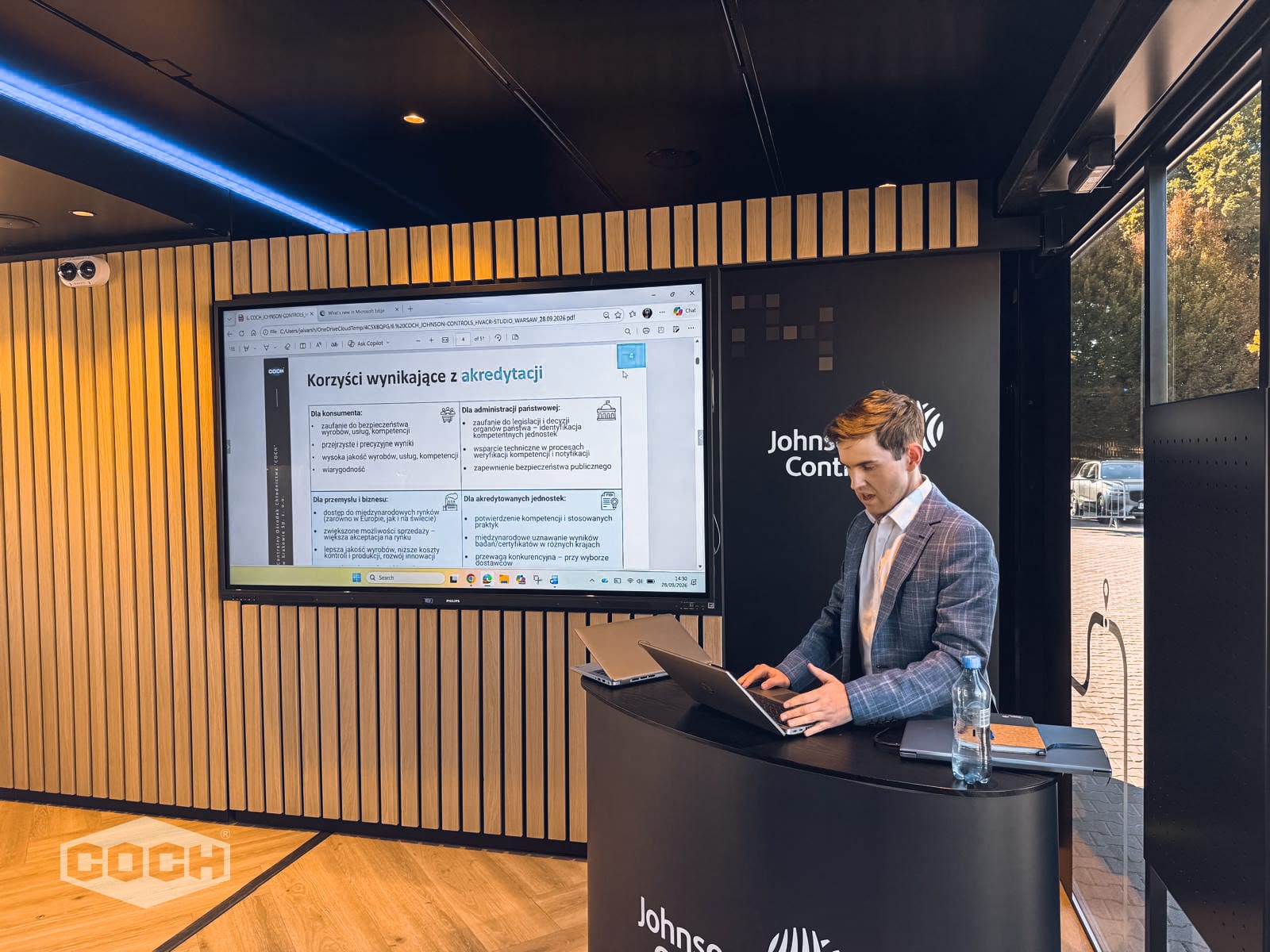
Benefits of accreditation
Accreditation of certification bodies guarantees that the body has and applies the required procedures, uses only competent personnel in certification activities, has the required technical equipment and appropriate insurance for the accredited certification body’s activities. Accreditation therefore provides ongoing supervision of fulfilment of requirements set for the certification body, and also stimulates continuous improvement of its competence and service quality. This is all the more important because the accreditation body itself is also supervised by international organisations, which in turn supports maintenance of its independence and impartiality in accreditation activities and of appropriate competence. The most important features of the national personnel certification system are presented below.
Key features of the national personnel certification system:
Accreditation – ensuring that certification activities are conducted by entities (certification bodies) in accordance with legal requirements and normative documents, ongoing supervision of certification bodies, and stimulation of improvement in competence and quality of their activities
Impartiality – ensured within accreditation already at the certification body level (need to ensure participation of all interested parties in implementing the body’s policy), making it unnecessary to appoint “central” expert teams for this purpose
Independence – guaranteed at the certification body level, confirmed continuously and under supervision during surveillance audits of the certification body’s accreditation certificate
Competition – transparent and “healthy” competition in certification services, resulting in improved service quality (“levelling up”), and the ability to compete also with foreign entities entitled to conduct certification activities in our country
Supervision of certification bodies – ongoing supervision by the accreditation body under the accreditation certificate, eliminating deviations from adopted procedures or malpractice
Supervision of issued certificates – ongoing and effective supervision by the accredited certification body of certificates issued for personnel and companies
Authorisation of assessment bodies – certification bodies can continuously supervise assessment bodies with regard to examination procedures used, technical equipment for examinations and competence of the assessment body’s personnel
Personnel competence – continuous improvement of competence of personnel of certification and assessment bodies (obligation of continuous improvement for accredited bodies)
Training – raising the level of training for certification needs through cooperation between certification, assessment and training bodies, e.g. in developing training and examination programmes and procedures
Environmental awareness – raising environmental awareness through, inter alia, mandatory verification of certification programmes of accredited certification bodies taking into account the views of all interested parties, and cooperation with industry organisations and recipients of services provided by certified personnel and companies
Openness of the system – ability of operating accredited certification bodies to act in new areas of competence certification
A certification system based on accredited certification bodies ensures: a guarantee of impartiality and independence, a high level of quality of services provided by certification bodies, participation of all significantly interested parties in creating and implementing the certification programme, accessibility for those wishing to conduct certification activities as well as for applicants for certification. It also means transparency, confidentiality and the ability to supervise certificate holders. All of this leads to a high level of competence of persons whose competence has been confirmed by a certificate.
Body accreditation as a guarantee of reliable and impartial personnel competence assessment

The Central Refrigeration Centre “COCH” in Kraków is the only institution in Poland with accreditation for certification of competence of personnel working in refrigeration, air conditioning and heat pumps, in accordance with the requirements of PN-EN 13313. The personnel certification body operates in accordance with PN-EN ISO/IEC 17024 and holds accreditation from the Polish Centre for Accreditation (PCA accreditation No. AC 056), an EA MLA signatory.
The certification process includes:
- candidate qualification;
- assessment of knowledge and practical skills (examination);
- issue of the certificate;
- supervision of the certificate holder;
- recertification.
The COCH Training Department provides preparatory training for the examination aimed at obtaining a competence certificate in accordance with PN-EN 13313.
It is possible to organise training and examination limited to a specific group of refrigerants, such as hydrocarbons or ammonia.
References
- Kurcz L., Warczak W. Refrigeration, air-conditioning and heat pump installations. Personnel competence certification in light of the requirements of current standards PN-EN 13313 and PN-EN ISO/IEC 17024 and EU regulations, Chłodnictwo, 2014 vol. 49, No. 9-10, pp. 2-5.
- Zenon Bonca, Dariusz Butrymowicz, Tomasz Hajduk, Waldemar Targański. New refrigerants and heat carriers – a handbook. Thermal, chemical and application properties. I.P.P.U. MASTA Sp. z o.o. 2004.
- CERTIFICATION PROGRAMME PR-04.1 Certification of competence of persons working in refrigeration, heat pumps and air conditioning. Prepared by: Personnel Certification Department of the Central Refrigeration Centre COCH in Kraków.
- Standard PN-EN 13313:2011 Refrigerating systems and heat pumps. Competence of personnel.
- Standard PN-EN ISO/IEC 17024:2012 Conformity assessment. General requirements for bodies operating certification of persons
Article prepared by:
MSc Eng. Bogdan SZCZEPAŃSKI
MSc Eng. Dorota NIEDOJADŁO
COCH offer
Competence certification to EN ISO 22712
Confirm your refrigeration, air-conditioning and heat pump qualifications.
Rate this article
Be the first to rate this article!